
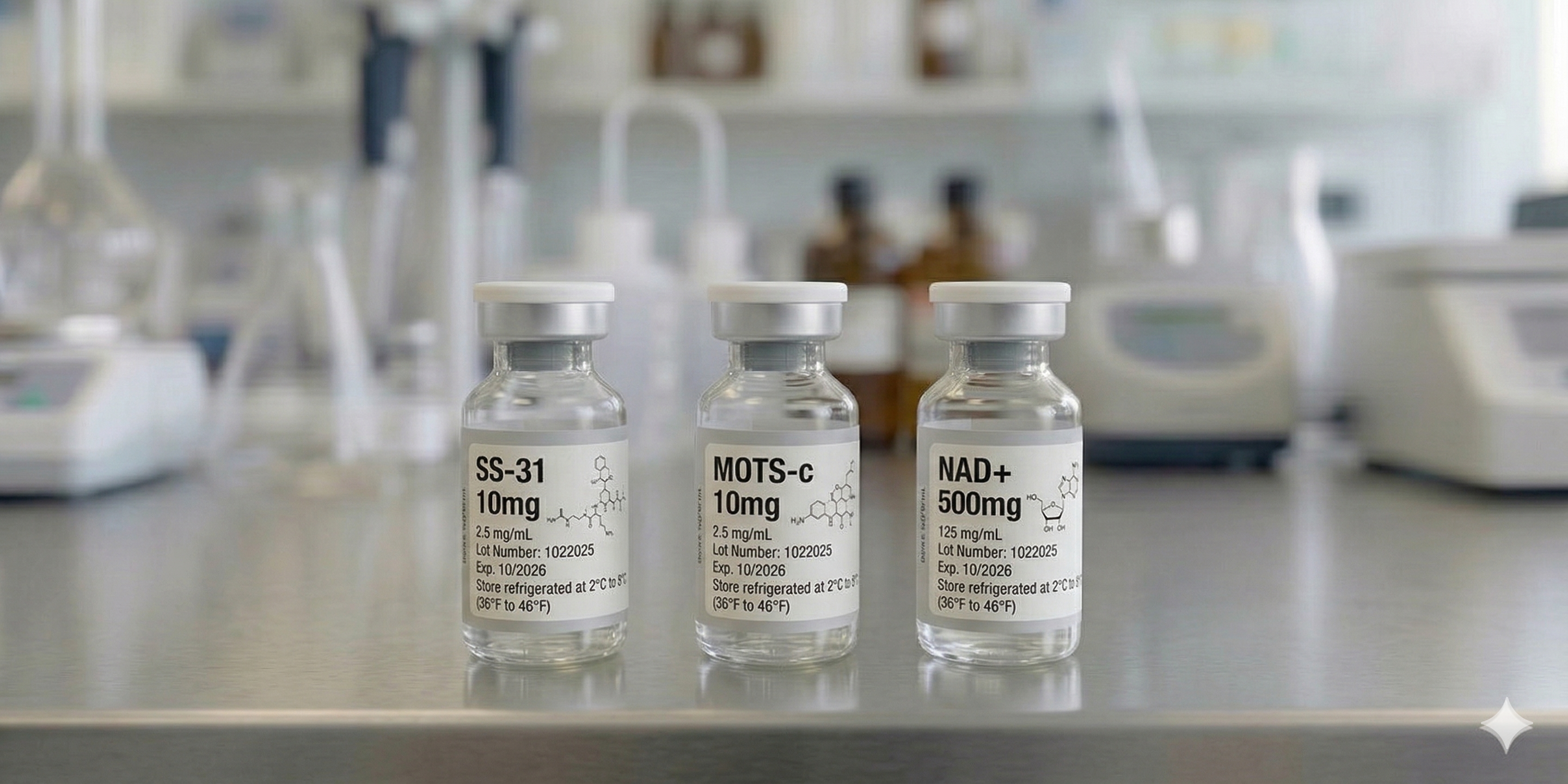
Mitochondrial Repair & Support
A 14-week mitochondrial repair and anti-aging peptide protocol, utilizing a combination of SS-31, MOTS-C, and NAD+, is a sophisticated approach aimed at restoring cellular energy and reversing markers of biological aging. This comprehensive strategy targets mitochondria—the cellular powerplants—at different levels of function and regulation, creating a synergistic effect to optimize metabolism and resilience.
Mechanism of Action
SS-31: This is a mitochondrial-targeted tetrapeptide. Its unique ability is to bind directly to cardiolipin, a crucial phospholipid found in the inner mitochondrial membrane. Cardiolipin is essential for organizing the respiratory chain and ensuring efficient ATP production. As we age, cardiolipin becomes damaged. SS-31 protects cardiolipin from oxidative stress, thereby stabilizing the mitochondrial structure and restoring energy output while drastically reducing the leakage of damaging reactive oxygen species (ROS).
MOTS-C: Known as a mitochondrial-derived peptide, MOTS-C acts as a distinct hormone-like regulator of both mitochondrial and nuclear gene expression. It is a powerful metabolic regulator, enhancing fatty acid oxidation, improving insulin sensitivity, and supporting physical endurance. Its primary function is to optimize the overall metabolic “fitness” of the cell.
NAD+: This coenzyme is indispensable for hundreds of metabolic processes, including glycolysis, the TCA cycle, and mitochondrial oxidative phosphorylation. Critically, NAD+ serves as the substrate for sirtuins, a family of “longevity proteins” that regulate DNA repair and mitochondrial biogenesis. Declining NAD+ levels are a hallmark of aging.
The Synergistic Approach: The Strategy
Preparation: Weeks 1–2 A foundation of NAD+ is established first. By increasing cellular NAD+, sirtuin activity is upregulated, preparing the metabolic pathways for subsequent mitochondrial support.
Repair: Weeks 3–8 SS-31 is introduced to directly target and repair damaged mitochondrial membranes and restore cardiolipin function. This is the core structural regeneration phase.
Optimization: Weeks 9–14 MOTS-C is used as the protocol moves into metabolic optimization. With repaired mitochondrial structure, MOTS-C can then maximize the metabolic output, improving energy utilization and supporting endurance, while NAD+ continues to facilitate all steps.
Reported Benefits of the Protocol
Drastically Increased Energy and Reduced Fatigue: Users frequently report a profound, sustainable boost in both mental and physical energy levels, indicating optimized cellular respiration.
Improved Cognitive Function: Repaired mitochondrial function in the brain supports synaptic health, potentially leading to better memory, focus, and clarity.
Enhanced Exercise Performance and Faster Recovery: Better energy production and metabolic efficiency support improved endurance, muscle strength, and recovery from physical stress.
Improved Metabolic Markers: Increased insulin sensitivity, optimized fat burning, and better glucose regulation are common outcomes, indicating a shift towards a more youthful metabolism.
Anti-Aging and Tissue Regeneration: By reducing oxidative stress and repairing cellular powerplants, the protocol supports overall systemic resilience and tissue health.