
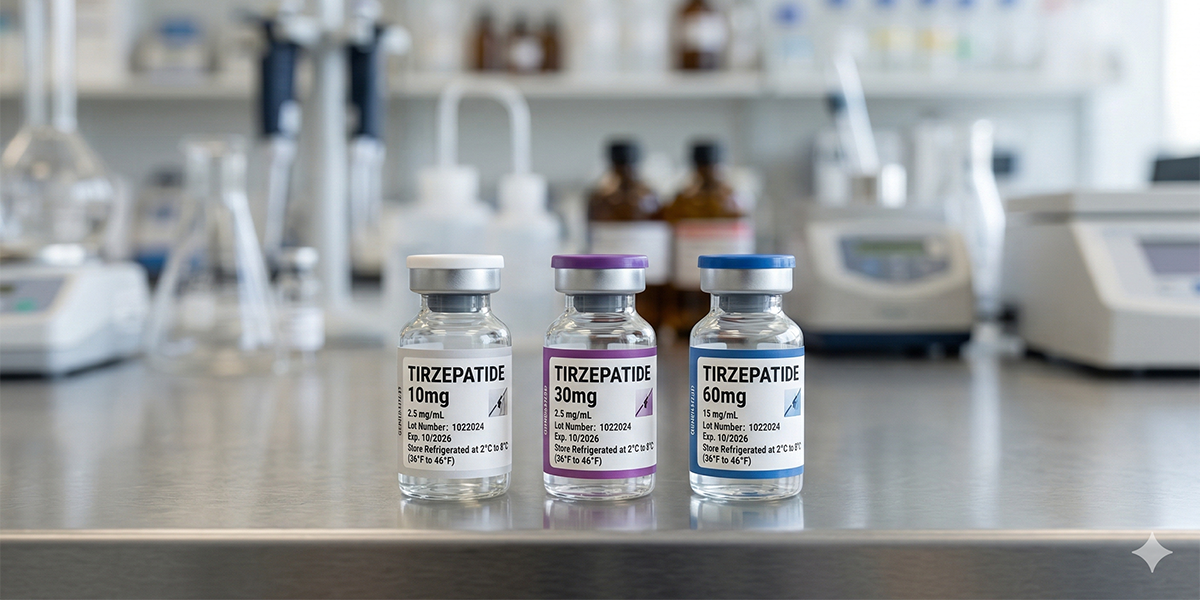
Tirzepatide
Tirzepatide is a synthetic peptide that mimics two specific hormones your body naturally produces after you eat. It is sold as a prescription medication under the brand names Mounjaro and Zepbound. In comparison, Semaglutide (sold as prescription medications Ozempic and Wegovy) only mimics one hormone, Tirzepatide is a “dual agonist,” meaning it pulls double duty.
It targets the GLP-1 (Glucagon-Like Peptide-1) and GIP (Glucose-dependent Insulinotropic Polypeptide) receptors.
How It Works: The Three-Pronged Attack
Tirzepatide changes how your body handles fuel by affecting three main areas: the pancreas, the stomach, and the brain.
1. The Pancreas (Blood Sugar Control)
When your blood sugar rises, Tirzepatide signals your pancreas to release more insulin. Simultaneously, it tells your body to stop releasing glucagon (a hormone that dumps stored sugar into your bloodstream). This dual action keeps your blood sugar levels stable.
Glucose-Dependent Insulinotropic Polypeptide (GIP) is the second hormone that sets Tirzepatide apart. GIP is thought to improve fat metabolism. It may help the body break down fat more efficiently and improve how fat cells store energy. GIP might also help offset some of the nausea typically caused by Semaglutide (Ozempic), though side effects may still occur. GIP boosts insulin sensitivity by enhancing the body’s ability to manage blood sugar.
2. The Stomach (Digestion Speed)
Tirzepatide slows down gastric emptying. This means food literally stays in your stomach longer. Because your stomach remains full, you feel satisfied for a much longer period after a meal, which naturally reduces your calorie intake.
3. The Brain (The “Food Noise” Switch)
Perhaps the most significant effect is on the brain’s hypothalamus. Tirzepatide binds to receptors that regulate appetite and reward.
- It lowers your overall hunger signals.
- It significantly reduces “food noise”—those intrusive, constant thoughts about what your next meal will be or cravings for snacks.
Why the Dual Approach Matters
Before Tirzepatide, medications usually only targeted the GLP-1 receptor. By adding the GIP component, Tirzepatide appears to be more effective. While GLP-1 is great for appetite and sugar, GIP is thought to improve how the body breaks down fat and may help reduce the nausea often associated with GLP-1 drugs.
Summary of Effects
- Insulin Sensitivity: Improves how your cells use energy.
- Weight Loss: Leads to significant reduction in fat mass due to lower caloric intake.
- Cardiovascular Health: Often leads to secondary benefits like lower blood pressure and improved cholesterol.